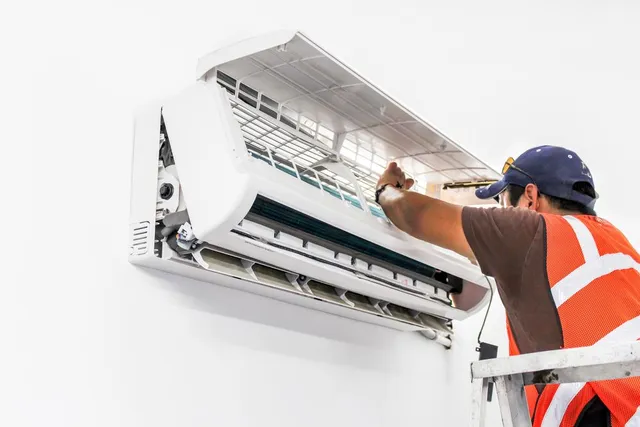
Residential cooling technology is changing rapidly as homeowners seek greater energy efficiency, improved comfort, quieter operation, and better control over indoor environments. In 2026, advances in variable-speed compressors, smart thermostats, heat-pump technology, connected diagnostics, and environmentally conscious refrigerants are influencing decisions about upgrading aging air conditioning equipment.
An older cooling system may continue operating for years, but declining efficiency, frequent breakdowns, inconsistent temperatures, and increasing maintenance costs can indicate that an upgrade deserves consideration. Choosing new equipment is not simply about purchasing a newer model. Proper sizing, installation, controls, airflow, and long-term operating costs all influence the value of an HVAC upgrade.
Air conditioners naturally lose efficiency as components age. Dust accumulation, restricted airflow, worn electrical parts, refrigerant-related problems, and declining mechanical performance can affect cooling capacity.
Older systems may also lack features available in newer equipment, such as variable-speed operation, advanced humidity management, smart controls, and improved diagnostic capabilities.
For homeowners evaluating the replacement of air conditioner equipment, comparing the condition of the existing system with the potential benefits of modern technology can provide a clearer picture of the long-term investment.
One of the most important developments in residential air conditioning is variable-speed compressor technology.
Traditional systems generally operate at a limited number of capacity levels. Variable-speed systems can adjust compressor output according to the home's actual cooling requirements.
During mild conditions, the system can operate at a lower capacity. During periods of extreme heat, it can increase output to meet higher demand.
This approach can improve temperature consistency, reduce frequent cycling, and potentially provide better humidity control.
However, efficiency depends on proper equipment sizing and installation. Even advanced equipment can perform poorly if it is incorrectly matched to the building.
Smart thermostats are becoming increasingly sophisticated in 2026. Modern controls can incorporate scheduling, occupancy detection, geofencing, remote access, weather information, and energy monitoring.
Some systems can learn household routines and adjust cooling automatically.
Remote connectivity allows homeowners to modify temperature settings through a smartphone, even when they are away from the property.
Smart controls can also provide useful information about HVAC runtime and energy consumption. This information can help homeowners identify unusual operating patterns and determine when professional service may be appropriate.
Artificial intelligence is increasingly influencing climate-control technology. AI-powered systems can analyze information such as indoor temperature, outdoor weather, occupancy, and historical usage.
Instead of relying entirely on fixed schedules, intelligent controls can adapt operation to changing conditions.
AI-assisted diagnostics can also identify unusual system behavior. For example, longer-than-normal cooling cycles may indicate changing equipment performance.
While AI cannot replace professional HVAC inspection, it can provide additional information that supports preventative maintenance and more efficient system management.
Refrigerant technology is another major consideration when upgrading older air conditioning equipment.
The HVAC industry continues transitioning toward refrigerants with improved environmental characteristics and updated regulatory requirements. New equipment may therefore use a different refrigerant technology from an older air conditioner.
Homeowners should avoid selecting equipment based solely on the initial purchase price. Refrigerant considerations, equipment efficiency, serviceability, installation requirements, and expected operating costs can all influence the long-term value of an HVAC system.
Qualified HVAC professionals can explain which equipment options are appropriate for a specific property.
One of the most important factors in an air conditioning upgrade is equipment sizing.
An oversized system can cool a home quickly but may not run long enough to provide effective humidity control. An undersized system may operate continuously during hot weather while struggling to maintain the desired indoor temperature.
Professional contractors can evaluate factors such as building size, insulation, windows, orientation, occupancy, ductwork, and local climate.
A proper load calculation provides a more reliable basis for equipment selection than simply choosing a replacement with the same nominal capacity as the existing unit.
Replacing an air conditioner without considering the duct system can limit the benefits of new technology.
Leaking, poorly insulated, restricted, or improperly designed ducts can reduce airflow and waste conditioned air.
During an upgrade, HVAC professionals can evaluate ductwork and identify problems that could affect the performance of the new system.
Improving airflow may help the equipment deliver its intended capacity while supporting better temperature distribution throughout the home.
Modern HVAC upgrades increasingly consider indoor air quality alongside temperature control.
High-efficiency filtration, humidity management, improved ventilation, and air-cleaning technologies can contribute to a more comfortable indoor environment.
However, filtration should be selected carefully. A filter that is too restrictive for a particular HVAC system can reduce airflow and potentially affect performance.
An HVAC professional can help determine which indoor air quality solutions are compatible with the equipment.
Installing new equipment does not eliminate the need for routine maintenance.
Filters should be maintained according to manufacturer recommendations, while professional inspections can evaluate coils, electrical connections, condensate drainage, airflow, controls, and other components.
Preventative maintenance can help identify developing problems before they become major failures.
Regular service also helps homeowners preserve the efficiency benefits of modern equipment.
There is no single age at which every air conditioner should be replaced. Equipment condition, repair history, efficiency, operating costs, and expected remaining lifespan all matter.
Replacement may become more attractive when an older system requires frequent repairs, struggles to maintain comfort, operates inefficiently, or experiences a major component failure.
Homeowners should compare the cost of continued repairs with the potential long-term benefits of new equipment.
A professional evaluation can help determine whether repairing the existing system or upgrading to newer technology makes greater financial sense.
The replacement of air conditioner systems is increasingly becoming an opportunity to improve more than basic cooling capacity. Homeowners can now consider variable-speed technology, smart controls, AI-assisted monitoring, improved refrigerants, advanced filtration, and better energy management.
Throughout 2026 and beyond, residential HVAC technology will continue moving toward greater connectivity, efficiency, and automation.
The most successful cooling upgrade combines appropriately sized equipment with professional installation, properly designed airflow, intelligent controls, and regular maintenance. By considering the complete HVAC system rather than focusing solely on the equipment itself, homeowners can make better long-term decisions about comfort, reliability, and energy consumption.

This post has been authored and published by one of our premium contributors, who are experts in their fields. They bring high-quality, well-researched content that adds significant value to our platform.










Motor Guide provides useful automobile information, including car reviews, vehicle guides, maintenance tips, driving advice, automotive news, and helpful insights for drivers and enthusiasts.