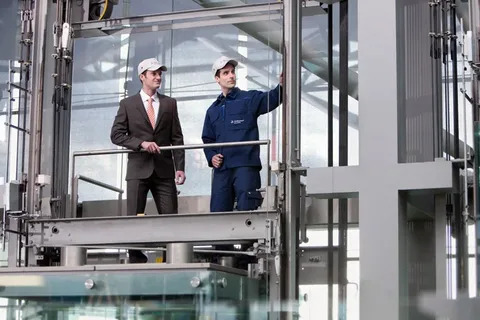
As a control system ages, so can its operational issues. Owners of buildings might experience repeated issues, irregular floor levelling or extended maintenance periods. These problems can impact the day-to-day business operations, especially in commercial buildings where there is a lot of foot traffic. So it's important to know the status of a lift control system to make the proper maintenance and upgrading decisions.
Obsolete lift controls are likely to result in unreliable operation, repeat failures and maintenance problems. The expert lift modernisation services take into account compatibility of equipment, existing controls and reoccurring technical problems. An analysis of the installation is undertaken prior to making recommendations for appropriate modernisation options. This evaluation is to determine if upgrading some parts of the system or replacing the entire system is required. With careful planning, property managers will also be able to take costs, downtime, safety and future maintenance into account.
Lift control systems control basic operations like door opening and closing, stopping accuracy and floor selection and movement. They exchange information with drives, sensors and other machinery in order to ensure predictable operation. But older controllers might be confronted by difficulties when parts break or are tough to get.
The other problem with outmoded technology is the difficulty of fault diagnosis. Specialist knowledge or compatible diagnostic equipment might be required to investigate some systems. This can result in delays in repairs if documentation or replacement parts are not available. Building owners should check maintenance records and see if these issues are recurring.
Faults that occur repeatedly can point to a problem with the controller, the electrical connection, the sensors, the drives or other components. Inconsistencies in floor levelling, unexpected floor shutdowns or irregular floor requests may occur. But such symptoms are not necessarily indicative of a failed controller.
The technician should check fault codes, check connected equipment, and look through the service history and compare what's happening to what has occurred in the past. This process can help to determine the true cause before a contractor is able to suggest repairs or modernisation options. A broader tech check might be warranted if multiple faults have a common cause.
Older control boards, electronic parts or diagnostics could be discontinued by manufacturers. In such cases, techs may end up waiting longer for parts and having fewer options. Some older systems also rely on parts with limited interoperability with equipment available.
However, when the supply is limited, it does not necessarily need to be replaced altogether. Examine and evaluate the current controller, available options, and status of systems being controlled. They should also check on the availability of replacement parts for future maintenance. This evidence enables the building owner to make some comparison between short and long term repairs and modernisation.
There are a number of warning signs that could warrant an in-depth examination of an older control system. These involve frequent power down, regular issues, irregular stopping, and more frequent repairs. Also, building managers may experience prolonged periods of downtime when it's difficult to find the right part to replace.
The symptoms of a disease, however, may be caused by more than one factor. The sensor or the door mechanism may be worn and cause issues similar to controller faults. As such, before recommending an upgrade, technicians should check the entire system. Evidence that can be of use for this decision includes maintenance records, fault reports and equipment documentation.
Gross motion, irregular stops or door responses might be noticed by passengers. These symptoms can reduce the convenience and may signal problems in the control circuits or in the equipment. The accuracy of floor levelling is important as there can be a tripping hazard if there are large differences.
Issues with doors also need to be thoroughly examined. Symptoms can be caused by faulty sensors, worn mechanisms, faulty wiring, or controller faults. Technicians should test appropriate components and ensure that the components are functioning as per the requirements. They can then decide on the type of repair that they would like to carry out or whether more extensive modernisation is the right choice.
High-frequency service calls can lead to maintenance costs and affect the building operations. When lift interruptions impact tenants, employees, visitors or deliveries, commercial properties can have unique challenges. But regular repairs may also make it difficult to plan maintenance costs.
It's important for building managers to review service records, parts costs and downtime for a reasonable period of time. There is no need for modernisation when the cost of a single repair is high. If this is happening repeatedly, however, and the parts are out-of-date, then there may be a problem that is ongoing. Examining these patterns enables decision makers to undertake a comparison between the cost of the repairs and the return on investment for an upgrade.
The process of expert lift modernisation services starts with an evaluation of the present lift. Fault history, condition of controller, connected components and building operating requirements are reviewed by specialists. They also take into account whether spares are available and the compatibility of potential spares.
The contractor will be able to suggest a scope of work after the inspection. This can involve swapping out certain control items, installing additional equipment or upgrading a more significant section of the system. Its decision should take into account technical results, safety criteria, an anticipated service life and budget considerations.
A controller replacement isn't just a matter of installing a new controller. The replacement needs to be able to communicate properly with door equipment, lift drive, sensors and appropriate safety circuits. If the components are not compatible, they may cause issues during operation or even make it impossible to operate the system as intended.
Technicians should consult wiring diagrams, equipment specifications and interface requirements before choosing replacement parts. Existing motor, brake and feedback devices must also be taken into account. For certain installations, it may be possible to retain appropriate components. For others, there may need to be further improvements to the connected equipment to ensure reliable operation.
New controllers can provide better diagnostics and/or greater control or monitoring. But the real performance will vary according to the equipment chosen and the state of the larger installation. Before the start of work, contractors should discuss what changes they anticipate and make sure to clarify any restrictions.
Once installed, the upgraded system will need to be tested by qualified technicians. Testing should include the floor levelling, travel operation, door response, control functions and safety devices that apply. It is also important to test communication between controller and the equipment.
Commissioning confirms the modernised lift functions in compliance with the technical requirements that apply. Contractors are required to record the outcomes of the tests, any problems they have encountered and adjustments that may be required. This information should be kept by the building owner for future inspections and maintenance.
The project needs to comply with the local regulatory and approval process as well. The requirements vary based on jurisdiction, installation type and scope of work. The obligations should be confirmed by a qualified contractor before the system is commissioned for normal use.
Owners of buildings must determine if the system is in good condition, if there is a demand for passengers, if the budget can support the upgrade, and if maintenance requirements are anticipated, before deciding to approve an upgrade. They should also take into account the operating times of the building and the impact of temporary lift closures. Clear planning helps to minimise uncertainty and provide clearer information to occupants about what they can expect to experience in the event of a disruption.
The contractor should outline scope, key components, project phases, testing plans, etc. Property managers should also enquire about the availability of spare parts, warranties and future maintenance obligations. All these elements help make proposals more easily comparable than their original costs.
Partial modernisation may be appropriate for lifts where the mechanical construction is adequate but there are some parts that are still in good condition. A contractor may use and install equipment that is compatible with an outdated controller but that fulfils the appropriate requirements. This can restrict the scope of the project if the inspection shows that the existing components are appropriate.
If there is deterioration of a number of key components or the overall compatibility of the installation is an issue, full system replacement might be warranted. The owner of the building should look at two factors: what is expected to be repaired in the building, and what are the risks in operating the building, and what are the cost implications in the long term? There's no one-size-fits-all solution for lifts. The evidence from a detailed assessment enables an informed decision to be made.
Building owners need to refresh themselves with a contractor's experience with the relevant systems, technical expertise, and knowledge of the existing lift system. They should request a clear scope of work, realistic timeline, and documented testing procedures. Comparable projects can also be helpful to read to get a sense of context.
In addition, owners should review warranty conditions, maintenance schedules and part availability. When operating under technical constraints, contractors need to tell the clients in simple terms, not claiming results without suitable proof. Good documentation and realistic expectations leads to better project coordination and more accountable services.
Vintage lift controls can cause persistent issues, maintenance challenges, and downtime. It is important that building owners review service records and get a professional opinion before deciding on an upgrade. Experts can provide you with the options, be it replacement of the individual controllers or more comprehensive lift modernisation. All recommendations, however, must take into account the condition of the lift, compatibility and applicable regulations. Through careful planning, competent installation and commissioning, building managers can make informed choices on long-term lift performance.
Frequent breakdowns, inconsistent lift movements, and recurring door faults can indicate outdated controls.A professional inspection can identify control issues and determine whether modernisation is necessary.
Yes, technicians can often replace outdated controllers while retaining compatible lift components. The decision depends on the system's condition, equipment compatibility, and safety requirements.
Modern lift controls can improve operational reliability and provide better monitoring of system performance. However, safety also depends on correct installation, testing, maintenance, and compliance with applicable standards.
The timeframe depends on the lift's design, the extent of upgrades, and component availability.
Expert lift modernisation services assess the project requirements to estimate downtime and completion time.

This post has been authored and published by one of our premium contributors, who are experts in their fields. They bring high-quality, well-researched content that adds significant value to our platform.











Motor Guide provides useful automobile information, including car reviews, vehicle guides, maintenance tips, driving advice, automotive news, and helpful insights for drivers and enthusiasts.